
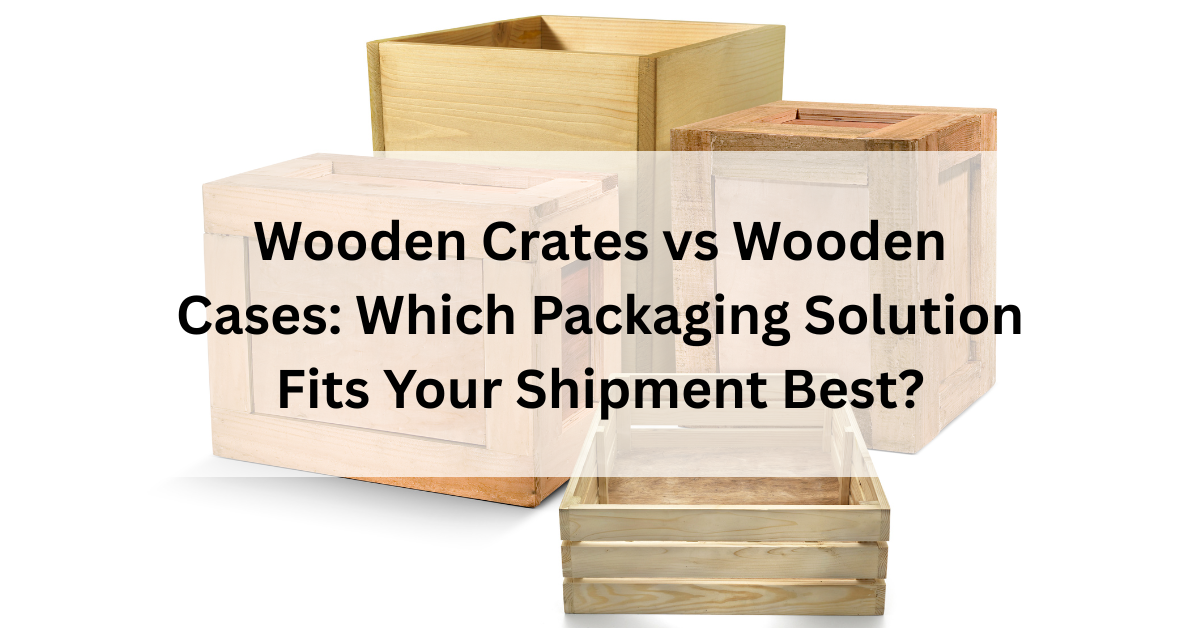

Choosing the right packaging solution is often the difference between a smooth shipment and costly damage. For businesses handling industrial equipment, machinery, or high-value goods, wooden crates and wooden cases remain two of the most trusted packaging options. While both are designed to protect cargo, their structures, applications, and advantages differ significantly.
Understanding these differences is essential—especially in Singapore, where goods are frequently transported through humid environments, busy ports, and international supply chains. Selecting the right solution not only protects your cargo but also improves efficiency, compliance, and cost control.
Why Wooden Packaging Remains the Industry Standard
Wooden packaging continues to dominate industrial logistics because it offers:
- High load-bearing strength
- Flexibility in custom design
- Compatibility with heavy machinery
- Compliance with international shipping standards
Global trade authorities recognise wooden packaging as a reliable solution when properly treated. According to the International Plant Protection Convention (IPPC), heat-treated wooden packaging is widely accepted for international trade due to its effectiveness in eliminating pests and protecting ecosystems.
This makes both wooden crates and wooden cases suitable for export—when chosen correctly.
What Are Wooden Crates?
Structure & Design
Wooden crates are open-sided containers constructed using slatted wooden panels. While the sides are not fully enclosed, they are reinforced to maintain structural integrity and strength.
Key Advantages of Wooden Crates
✔ Ventilation without sacrificing strength
The slatted design allows airflow, reducing condensation risks—especially useful in Singapore’s humid climate.
✔ Easy access during handling
The open sides make wooden crates ideal for heavy or bulky items that require frequent inspection or lifting.
✔ Stackable for efficiency
Wooden crates are designed to be stacked safely, optimising space in warehouses, trucks, and containers.
✔ Cost-effective for large machinery
Because they use less material than enclosed cases, crates are often more economical for oversized equipment.
Best Uses for Wooden Crates
- Heavy machinery
- Industrial components
- Construction materials
- Equipment requiring ventilation
- Short-term storage or transport
What Are Wooden Cases?
Structure & Design
Wooden cases are fully enclosed containers, tightly sealed on all sides. They are built for maximum protection against environmental exposure, impact, and handling risks.
Key Advantages of Wooden Cases
✔ Maximum environmental protection
Fully enclosed walls shield cargo from moisture, dust, rain, and contaminants.
✔ Ideal for sensitive or high-value goods
Wooden cases are commonly used for equipment sensitive to humidity, vibration, or temperature changes.
✔ Enhanced durability and longevity
Because of their solid construction, wooden cases are often reused multiple times.
✔ Better security during transit
Enclosed cases reduce tampering risks and protect goods from accidental contact.
Best Uses for Wooden Cases
- Precision machinery
- Electronics and control panels
- Medical equipment
- Aerospace and semiconductor tools
- Long-distance or sea freight shipments
Key Differences: Wooden Crates vs Wooden Cases
| Feature | Wooden Crates | Wooden Cases |
| Structure | Open-sided, slatted | Fully enclosed |
| Ventilation | Excellent | Limited |
| Environmental Protection | Moderate | High |
| Accessibility | Easy | Limited |
| Cost | Generally lower | Higher |
| Reusability | Moderate | High |
| Best For | Bulky, heavy goods | Sensitive, valuable goods |
Both options offer strong protection, but the right choice depends on your cargo type, destination, and risk exposure.
Singapore-Specific Considerations When Choosing
In Singapore, packaging decisions must consider:
- High humidity and rainfall
- Long port dwell times
- Export compliance requirements
- Forklift and crane handling
- Warehouse stacking limitations
For example:
- Equipment sensitive to moisture or corrosion benefits from wooden cases
- Large machinery that requires airflow and easy handling may be better suited to wooden crates
Heat treatment is also essential for export compliance. According to guidelines published by the Food and Agriculture Organization of the United Nations (FAO), ISPM 15-compliant wooden packaging prevents pest transmission during international trade.
This ensures your shipment moves smoothly across borders without delays or rejection.
Still Unsure Which Packaging Is Right for You?
Choosing between wooden crates and wooden cases isn’t about which is better—it’s about which is right for your shipment.
Factors to consider include:
- Cargo value and sensitivity
- Environmental exposure
- Handling frequency
- Export destination
- Storage duration
An experienced packaging provider will assess these variables and recommend the most effective solution.
Conclusion
Both wooden crates and wooden cases play critical roles in modern logistics. Crates offer flexibility, ventilation, and efficiency for heavy or bulky items, while cases provide maximum protection for sensitive, high-value equipment.
Understanding their differences allows businesses to reduce damage risks, control costs, and ensure compliance, especially when shipping from Singapore’s demanding logistics environment.
Choosing the right packaging is not just about protection; it’s about confidence at every stage of the supply chain.