
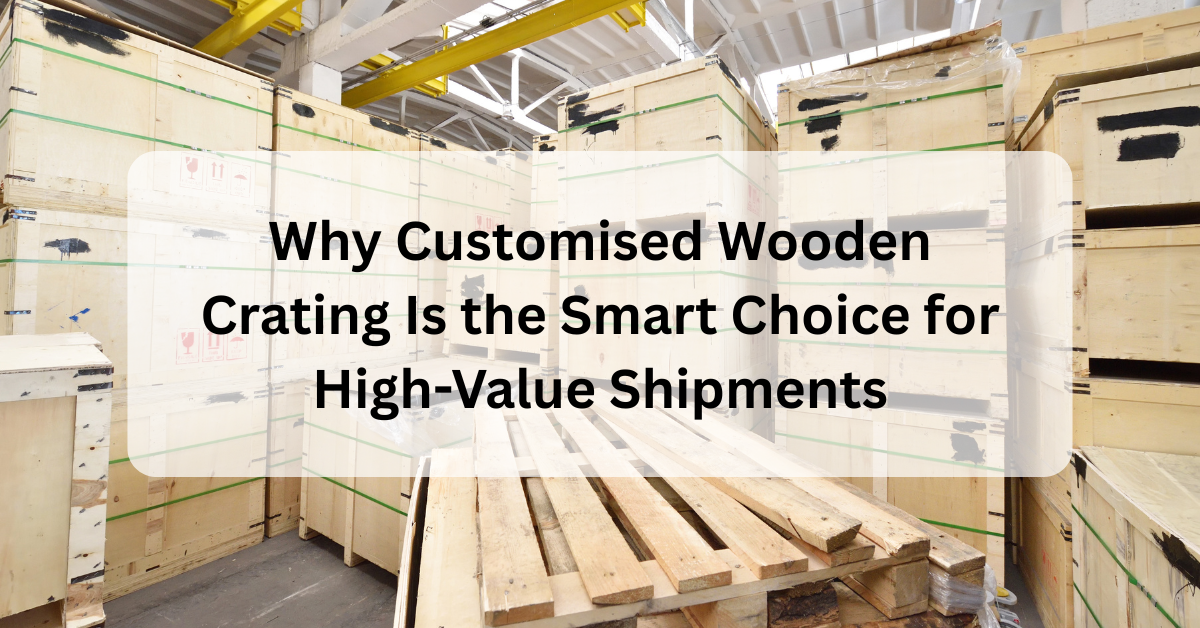

In industrial logistics, standard packaging is rarely sufficient. Machinery, sensitive equipment, and oversized cargo each come with unique dimensions, weight distributions, and handling risks. This is why customised wooden crating has become an essential solution for businesses that cannot afford damage, delays, or compliance issues.
Unlike off-the-shelf packaging, wooden crates designed specifically for a product provide tailored protection that supports safe handling, efficient transport, and reliable delivery — especially in Singapore’s demanding logistics environment.
The Limitations of Standard Wooden Crates
While standard wooden crates may appear cost-effective at first glance, they often introduce hidden risks. Generic crate dimensions may leave excess space, causing internal movement, or apply pressure to weak points of the equipment.
Common problems with non-custom crates include:
- Uneven load support
- Excessive vibration during transit
- Poor weight distribution for lifting
- Higher risk of damage during stacking
Customised wooden crating addresses these issues by engineering the crate around the cargo — not forcing the cargo to fit the crate.
What Makes Customised Wooden Crating Different?
Precision Engineering From the Start
Customised wooden crating begins with detailed measurements and load analysis. Engineers assess:
- Equipment dimensions and weight
- Centre of gravity
- Fragile or high-stress components
- Transport and lifting methods
This data determines the internal structure, base reinforcement, and bracing points of the wooden crate.
Structural Strength Where It Matters
Not all parts of a crate bear equal load. In customised wooden crating, reinforcement is added exactly where stress occurs — corners, lifting points, and base supports.
This ensures:
- Safer forklift and crane handling
- Reduced flexing under weight
- Better resistance to impact forces
The result is a wooden crate that functions as a structural support system, not just a container.
Customised Wooden Crating for Singapore’s Export Environment
Singapore’s role as a global trade hub means cargo is exposed to:
- High humidity and rainfall
- Long sea freight durations
- Multiple handling points
- Strict port and customs inspections
Customised wooden crating allows additional protective measures such as moisture barriers, sealed bases, and internal padding to be integrated into the crate design.
This is especially important for exporters shipping machinery, electronics, or precision tools to regions with long transit times.
Compliance and Heat Treatment Considerations
For international shipments, wooden crates must comply with global phytosanitary regulations to prevent the spread of pests. Proper heat treatment eliminates harmful organisms inside the wood, ensuring crates are accepted at destination ports.
The International Plant Protection Convention (IPPC) — a global treaty overseen by the United Nations — sets these standards to protect agriculture and ecosystems worldwide.
Customised wooden crating providers ensure that crates are not only structurally sound, but also compliant and traceable for export use.
Better Protection for High-Value and Fragile Equipment
Customised wooden crating is especially valuable for:
- Industrial machinery
- Medical and laboratory equipment
- Semiconductor tools
- Offshore and energy components
Internal blocking, shock-absorbing supports, and vibration control systems are designed specifically for the equipment’s sensitivity. This reduces the risk of micro-damage that may not be visible upon delivery but can cause operational failure later.
Cost Efficiency Beyond the Initial Price
While customised wooden crating may have a higher upfront cost than generic packaging, it significantly reduces:
- Repair and replacement expenses
- Insurance claims
- Shipment delays
- Reputational risk
In many cases, customised wooden crates are reusable, making them more cost-effective over multiple shipments.
Experience Matters in Custom Wooden Crating
Effective customised wooden crating requires more than woodworking skills. It demands an understanding of logistics workflows, handling equipment, export regulations, and cargo behaviour during transit.
Experienced providers combine:
- Engineering knowledge
- Skilled craftsmanship
- Industrial-grade materials
- Quality control processes
This expertise ensures consistency, safety, and reliability across every project.
Conclusion
In modern logistics, protecting cargo is not about using stronger materials — it is about using smarter design. Customised wooden crating offers a level of precision, protection, and compliance that standard wooden crates simply cannot match.
For businesses handling high-value or fragile cargo, investing in professionally engineered wooden crates is a strategic decision that safeguards assets, reduces risk, and supports smooth global transit.