
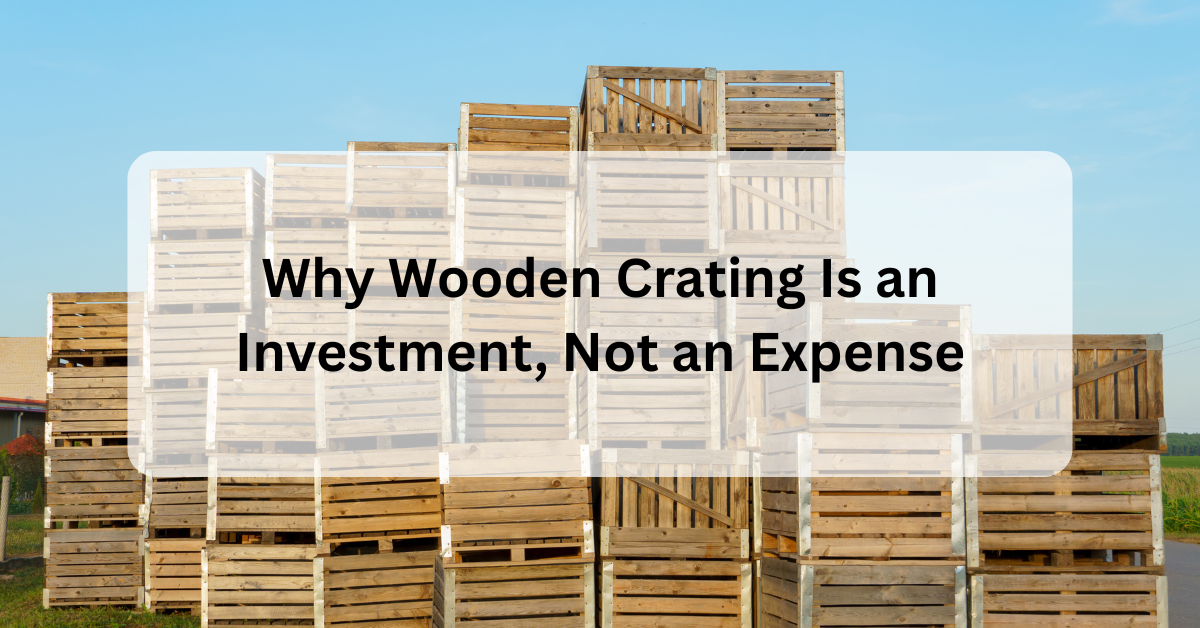

When businesses evaluate shipping costs, packaging is often viewed as an area where expenses can be reduced. It may seem tempting to choose the cheapest packaging option available, especially for large or frequent shipments. However, for industrial equipment, heavy machinery, and export cargo, cutting corners on packaging can lead to far greater costs than the initial savings.
This is where wooden crating proves its value. Rather than being an additional expense, professionally designed wooden crating is an investment that protects valuable assets, minimises transportation risks, and improves overall supply chain efficiency.
For businesses in Singapore involved in manufacturing, engineering, construction, or international exports, investing in quality wooden crating can result in significant long-term cost savings.
The Real Cost of Damaged Cargo
When equipment arrives damaged, the financial impact extends well beyond repair costs.
Businesses may also face:
- Project delays
- Production downtime
- Replacement part expenses
- Emergency shipping charges
- Insurance claims
- Loss of customer confidence
For high-value machinery, a single damaged shipment can cost thousands—or even tens of thousands—of dollars.
Professional wooden crating helps reduce these risks by providing strong structural protection throughout the logistics journey.
Preventing Damage Before It Happens
Industrial cargo is exposed to multiple risks before it reaches its destination. Equipment may be transported by truck, handled with forklifts, loaded into containers, stored in warehouses, transferred at ports, and finally delivered to project sites.
Each handling stage increases the possibility of:
- Impact damage
- Cargo shifting
- Excessive vibration
- Compression from stacking
- Accidental collisions
A professionally engineered wooden crate is designed to absorb these external forces while keeping equipment securely in place.
Preventing damage before it occurs is always more cost-effective than repairing or replacing expensive machinery.
Lower Insurance Risks
Many cargo insurance providers assess how shipments were packed before approving compensation for damaged goods.
Poor packaging may result in:
- Reduced claim values
- Delayed investigations
- Disputes over liability
Using professional wooden crating demonstrates that reasonable precautions were taken to protect the shipment.
While every insurance policy differs, businesses that invest in proper packaging often experience fewer disputes when unexpected incidents occur.
Reducing Unexpected Logistics Costs
Damaged cargo rarely affects only one part of the supply chain.
Additional expenses may include:
- Re-delivery charges
- Extra warehouse storage
- Labour costs for repacking
- Replacement transportation
- Installation delays
These hidden costs often exceed the original packaging budget.
By investing in reliable wooden crating from the beginning, businesses reduce the likelihood of disruptions that increase overall logistics expenses.
Custom Wooden Crating Maximises Protection
Every shipment has different requirements. A one-size-fits-all approach rarely provides the best protection for industrial equipment.
Professional wooden crating is customised based on:
- Equipment dimensions
- Weight distribution
- Centre of gravity
- Fragility
- Lifting methods
- Transportation route
This ensures the crate supports the cargo correctly throughout every stage of transportation.
The result is greater stability, improved handling, and reduced movement during transit.
Export Compliance Helps Avoid Costly Delays
Singapore businesses involved in international shipping must ensure wooden packaging complies with global phytosanitary regulations.
Wood packaging materials used for export generally require ISPM 15 heat treatment to prevent the spread of pests.
The International Plant Protection Convention (IPPC) provides internationally recognised guidance on wood packaging standards used in global trade.
Using export-compliant wooden crating reduces the risk of customs delays, rejected shipments, and additional inspection fees.
Better Handling Means Faster Operations
Well-designed wooden crating doesn’t just protect cargo—it also improves operational efficiency.
Professional crates are built with handling in mind, allowing forklifts and cranes to move heavy equipment safely and efficiently.
Benefits include:
- Faster loading and unloading
- Improved warehouse organisation
- Reduced manual handling
- Lower workplace safety risks
For businesses handling multiple shipments, these efficiencies contribute to smoother daily operations.
Wooden Crating Supports Sustainable Logistics
Sustainability has become an important consideration for businesses looking to reduce their environmental impact.
Wooden crates offer several environmental advantages:
- Timber is a renewable resource
- Crates can often be repaired
- Many wooden crates are reused multiple times
- Wood can be recycled at the end of its lifecycle
The Forest Stewardship Council (FSC) promotes responsible forest management and sustainable sourcing of wood products worldwide.
Choosing responsibly sourced wooden packaging supports both environmental goals and long-term business sustainability.
Why Experience Matters
Effective wooden crating requires technical expertise, not simply woodworking skills.
Experienced packaging specialists consider:
- Structural strength
- Load-bearing capacity
- Transportation methods
- Export requirements
- Cargo sensitivity
Every design decision contributes to the crate’s ability to protect valuable equipment under real shipping conditions.
At Kaibeng, each wooden crating solution is carefully engineered to match the unique requirements of the shipment. From heavy industrial machinery to precision equipment and project cargo, every crate is built with durability, safety, and logistics efficiency in mind.
This customised approach helps businesses reduce risks while protecting valuable investments throughout the supply chain.
Conclusion
The cheapest packaging option is not always the most economical. When shipping valuable machinery or industrial equipment, the cost of damage, delays, and operational disruptions can quickly outweigh any initial savings.
Professional wooden crating provides far more than physical protection—it helps businesses reduce hidden logistics costs, improve handling efficiency, comply with international shipping requirements, and safeguard valuable assets from origin to destination.
For companies that value reliability, operational efficiency, and long-term cost savings, investing in high-quality wooden crating is a smart business decision that continues to deliver value with every shipment.