
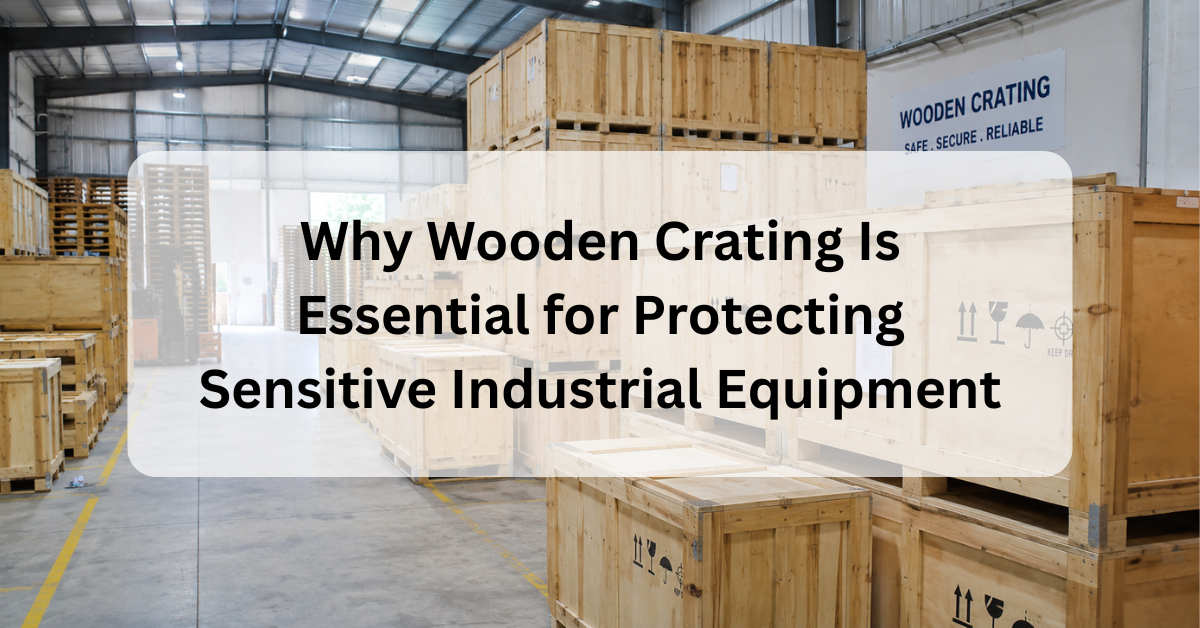

Not all cargo is built to withstand the challenges of transportation. While heavy machinery may appear robust on the outside, many industrial assets contain delicate internal components that can be easily affected by vibration, sudden impacts, moisture, or improper handling. For businesses transporting precision equipment, electrical systems, and high-value machinery, wooden crating is more than protective packaging—it is a critical investment in safeguarding operational continuity.
Across Singapore’s manufacturing, semiconductor, aerospace, marine, and engineering industries, businesses are increasingly relying on professionally engineered wooden crating to protect sensitive equipment throughout the logistics journey. Unlike generic packaging, wooden crating is designed specifically for each shipment, ensuring valuable assets remain secure from the moment they leave the facility until they reach their destination.
Why Sensitive Equipment Requires More Than Standard Packaging
Industrial equipment often contains sophisticated components that are vulnerable to movement during transportation. Even if the exterior appears undamaged, excessive vibration or internal shifting can affect calibration, alignment, or electronic systems.
Examples of sensitive equipment include:
- CNC machines
- Semiconductor manufacturing equipment
- Laboratory instruments
- Medical devices
- Electrical control panels
- Testing and measuring instruments
- Automation systems
Standard cartons or pallets offer limited structural support for these valuable assets. Professional wooden crating provides a rigid framework that helps isolate equipment from external forces encountered during shipping.
Protection Against Vibration During Transit
One of the most overlooked causes of cargo damage is continuous vibration.
During road transportation, shipping containers and trucks generate constant movement that can loosen bolts, misalign components, or damage delicate internal mechanisms.
Professional wooden crating minimises vibration through:
- Secure equipment anchoring
- Reinforced internal supports
- Custom-fitted blocking
- Shock-absorbing cushioning materials
These features reduce movement inside the crate and provide greater stability throughout transportation.
Preventing Impact Damage During Handling
Cargo is often moved multiple times before reaching its final destination.
Typical handling stages include:
- Warehouse loading
- Forklift transportation
- Crane lifting
- Port operations
- Container loading
- Site delivery
Each movement presents an opportunity for accidental impact.
A professionally engineered wooden crate distributes external forces across its structural frame instead of allowing direct pressure on the equipment itself.
This greatly reduces the likelihood of physical damage during handling.
Moisture Protection for Singapore’s Climate
Singapore’s humid climate presents another challenge for industrial shipments.
High humidity and condensation can lead to:
- Rust formation
- Corrosion
- Electrical damage
- Mould growth
- Deterioration of sensitive components
Professional wooden crating can be combined with specialised moisture-control solutions, including:
- Vapour barrier bags
- Desiccants
- Waterproof wrapping
- Heat-treated timber
- Moisture-resistant liners
These protective measures help maintain equipment integrity during storage, local transportation, and international shipping.
Custom Wooden Crating Provides a Better Fit
Every piece of industrial equipment has unique dimensions, weight distribution, and lifting requirements.
Instead of forcing machinery into standard packaging, professional wooden crating is designed around the cargo itself.
Before manufacturing begins, experienced crating specialists assess:
- Overall dimensions
- Weight
- Centre of gravity
- Fragility
- Lifting points
- Transport method
This customised approach creates packaging that provides maximum stability while allowing safe handling throughout the logistics process.
Supporting International Export Requirements
Many Singapore businesses export equipment worldwide. International shipping requires packaging that complies with recognised global standards.
Wood packaging materials used in export shipments generally require heat treatment under ISPM 15, which helps prevent the spread of pests between countries.
The International Plant Protection Convention (IPPC) provides internationally recognised guidance on wood packaging regulations and export compliance.
Using export-compliant wooden crating helps minimise customs delays and supports smoother international transportation.
Reliable Wooden Crating Improves Logistics Efficiency
Wooden crating benefits not only cargo protection but also logistics operations.
Well-designed crates improve:
- Forklift accessibility
- Crane lifting stability
- Warehouse storage
- Container loading
- Shipment organisation
By making cargo easier to handle safely, businesses reduce loading time while improving workplace safety.
Efficient handling also lowers the risk of accidental damage caused by improper lifting or unstable packaging.
Sustainability Remains an Important Advantage
As businesses continue pursuing environmental goals, wooden packaging remains one of the most sustainable industrial packaging options available.
Professionally built wooden crates can often be:
- Repaired after use
- Reused for future shipments
- Recycled into other timber products
The Forest Stewardship Council (FSC) promotes responsible forest management and sustainable timber sourcing that supports environmentally responsible business practices.
Choosing responsibly sourced timber allows businesses to improve sustainability while maintaining high standards of cargo protection.
Why Experience Makes the Difference
Successful wooden crating depends on more than quality materials. It requires technical expertise, engineering knowledge, and practical logistics experience.
Professional crating specialists understand:
- Load distribution
- Structural reinforcement
- Transport risks
- Export regulations
- Handling equipment requirements
These factors determine how well a crate performs under real transportation conditions.
At Kaibeng, every wooden crating solution is customised to match the customer’s equipment, destination, and logistics requirements. Whether transporting delicate electronics, industrial machinery, or oversized engineering equipment, Kaibeng combines skilled craftsmanship with industry expertise to deliver durable crating solutions that protect valuable cargo throughout every stage of the supply chain.
Conclusion
Sensitive industrial equipment deserves more than ordinary packaging. From vibration control and impact resistance to moisture protection and export compliance, professional wooden crating provides the comprehensive protection needed for today’s complex logistics environment.
For businesses in Singapore that rely on precision equipment and high-value machinery, investing in professionally engineered wooden crating helps minimise transportation risks, improve operational efficiency, and protect valuable assets throughout local and international shipments.
With the right crating partner, businesses gain confidence knowing their equipment is protected by packaging that is purpose-built for safety, durability, and long-term reliability.