
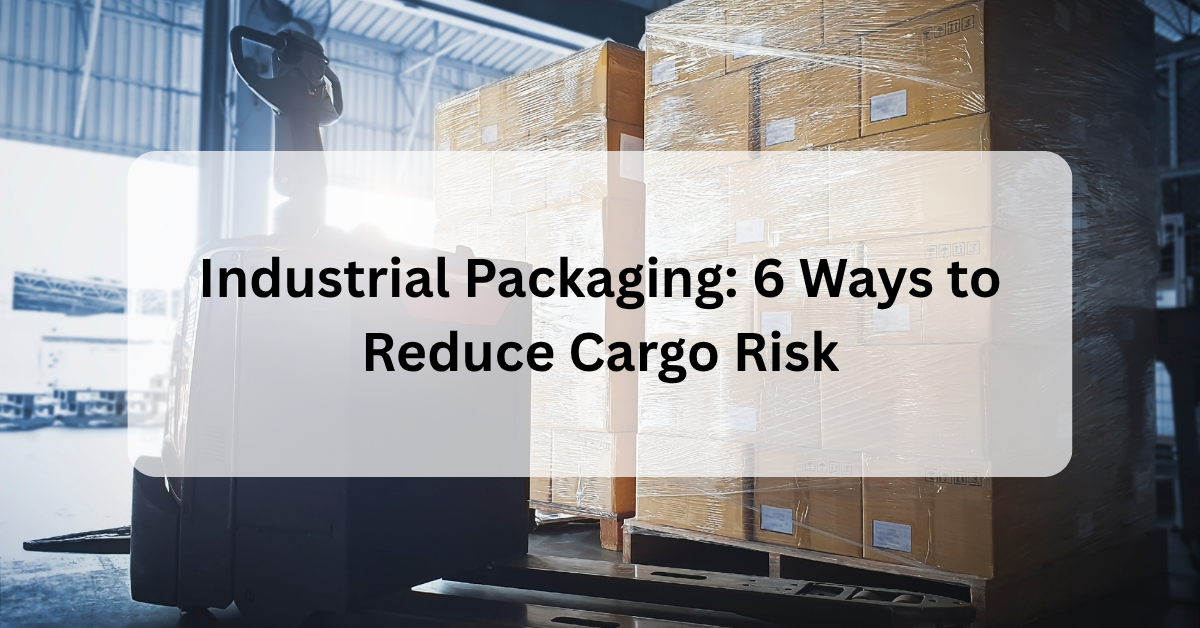

A damaged machine, dented component or moisture-affected product can create problems long after it leaves the factory. For industrial businesses, the cost may include repairs, replacement parts, delayed projects and disrupted delivery schedules.
This is why industrial packaging should be treated as more than an outer layer around a product. It is part of the risk-control process that prepares cargo for lifting, handling, storage and transportation.
For manufacturers and logistics teams in Singapore, choosing the right packaging approach can help cargo move through different stages of the supply chain with greater protection and fewer avoidable risks.
1. Start With the Cargo, Not the Packaging Material
There is no single packaging method suitable for every industrial product.
The first step is to understand the cargo itself. Its dimensions, weight, centre of gravity, fragility, surface condition and sensitivity to moisture can all influence the packaging design.
Heavy machinery may require a rigid structure capable of supporting its weight, while sensitive equipment may need cushioning or additional protection against vibration and impact.
This cargo-first approach helps businesses avoid a common mistake: selecting a packaging material simply because it is readily available rather than because it suits the product and its intended journey.
2. Consider Every Handling Point
Industrial cargo may be lifted, moved by forklift, loaded into containers, transferred between facilities and stored before reaching its final destination.
Each handling point introduces another opportunity for movement or impact.
The International Maritime Organization (IMO) highlights the importance of proper packing, stowage and securing of cargo transport units. Its CTU Code provides guidance covering cargo packing and securing across the intermodal transport chain.
This means industrial packaging should be designed with the entire journey in mind rather than only the initial movement from the factory.
3. Build Protection Around the Actual Transport Risk
Different transportation conditions create different risks.
For example, cargo travelling by sea may face prolonged exposure to humidity and changing environmental conditions. Road transportation can involve vibration, sudden braking and uneven surfaces. Warehouse handling may introduce risks from lifting equipment or repeated movement.
Professional packaging can therefore incorporate different protection methods depending on the cargo and destination.
Kaibeng’s packaging solutions include methods such as normal packaging, vacuum packaging, base packaging, heat shrink, VCI and Triwall solutions. Selecting between these approaches should depend on the product’s characteristics, transportation requirements and expected environmental exposure.
The objective is not simply to make packaging stronger. It is to make the protection appropriate for the actual risks involved.
4. Reduce Unnecessary Movement Inside the Package
A package can appear strong from the outside while still providing inadequate protection if the cargo can move internally.
Internal movement may cause components to collide with packaging materials or place stress on sensitive parts during transportation.
Proper positioning, cushioning, blocking and securing can help reduce unwanted movement.
The IMO’s cargo packing guidance recommends measures such as filling void spaces where necessary and using appropriate blocking or lashing to prevent cargo from sliding or tipping.
For industrial products, this is particularly important when transporting equipment with uneven weight distribution or delicate components.
5. Think About Storage Before the Shipment Leaves
Industrial packaging does not necessarily end when cargo reaches the warehouse.
Some products may remain in storage for days, weeks or longer before being dispatched. During this period, packaging may need to continue protecting the cargo from dust, moisture, handling and environmental conditions.
This is where packaging planning and warehousing requirements should work together.
For businesses using Singapore as a regional logistics hub, considering the storage stage early can help prevent situations where packaging is suitable for transportation but unsuitable for longer-term storage.
A packaging provider with experience across packaging and logistics can assess how the cargo needs to be protected throughout both stages.
6. Packaging Should Support Operational Efficiency
Good industrial packaging is not only about protection. It can also influence how efficiently cargo is handled.
A properly designed package can make lifting points easier to identify, improve cargo stability and simplify handling procedures. Clear identification and suitable packaging dimensions can also support smoother warehouse and transportation operations.
For export shipments, businesses should also ensure that their cargo documentation and packaging information are properly coordinated. Singapore Customs outlines documentation requirements for exported containerised and conventional cargo, including items such as packing lists and Bills of Lading or Air Waybills where applicable.
Packaging therefore needs to fit into the wider logistics process rather than being treated as an isolated activity.
Choosing an Industrial Packaging Partner
Industrial cargo often has specifications that standard commercial packaging cannot accommodate.
A suitable packaging partner should be able to assess the cargo, understand its transportation and storage requirements, recommend appropriate protection methods and execute the packaging accurately.
Experience is particularly valuable when handling heavy machinery, sensitive equipment or oversized industrial products because packaging decisions can affect subsequent lifting, transportation and storage activities.
Kaibeng has more than six decades of experience in industrial packaging and wooden crating, supported by a 20,000 sq ft production space. Its packaging solutions are designed around different shipping requirements, product characteristics and logistics conditions.
Conclusion
Effective industrial packaging is ultimately about controlling risk before cargo enters the supply chain. Instead of simply selecting a strong box or protective material, businesses should consider the cargo’s characteristics, handling points, transportation conditions, storage requirements and securing needs.
By taking a complete approach to packaging, Singapore businesses can better protect valuable industrial cargo while supporting safer and more efficient logistics operations.
For complex machinery and industrial products, professional packaging can provide the planning and protection needed to move cargo from the factory to its destination with greater confidence.