
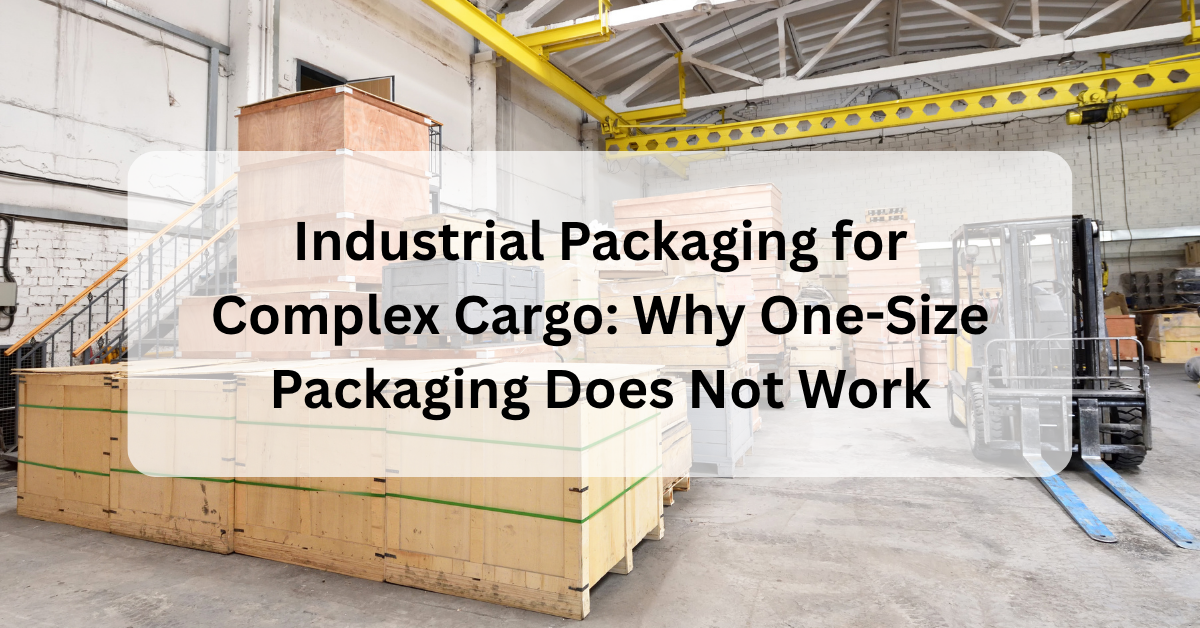

Industrial cargo is rarely simple. A shipment may include heavy machinery, precision components, oversized equipment or multiple parts that need to arrive together and in the correct condition. In these situations, standard packaging dimensions may not provide the right fit, support or protection.
This is where industrial packaging becomes a planning and engineering process rather than simply choosing a container.
The right solution should consider the cargo’s shape, weight distribution, sensitive areas, transport method and how it will be handled throughout its journey. For complex equipment, even a small packaging oversight can create unnecessary movement, uneven load support or difficulties during loading and unloading.
At Kaibeng, packaging solutions are developed based on shipping requirements, destination and the unique properties of each product. Available methods include normal, vacuum, base, heat shrink, VCI and Triwall solutions.
Why Complex Cargo Needs a Different Packaging Approach
Standardised packaging works best when products have consistent sizes and predictable handling requirements. Industrial cargo often does not.
For example, a piece of equipment may have:
- An irregular shape
- Protruding components
- Uneven weight distribution
- Fragile control panels or instruments
- Multiple detachable parts
- Large dimensions that exceed standard packaging sizes
Trying to force such cargo into a standard packaging format can leave unsupported areas or create too much empty space. Both situations can increase the risk of movement and damage.
Professional industrial packaging starts by examining the actual cargo and identifying the areas that need structural support or specialised protection.
Step 1: Assess the Full Cargo Profile
Before packaging materials are selected, the cargo should be properly assessed.
This includes more than measuring its length, width and height. The packaging team should understand the complete profile of the equipment, including its weight, centre of gravity and vulnerable areas.
For machinery, it is also important to identify whether certain parts require additional clearance or protection. Components such as cables, gauges, screens and external fittings may be more vulnerable than the main structure.
This information helps determine how the equipment should be positioned and supported during the packaging process.
A cargo-first approach also prevents unnecessary overpacking. The goal is not simply to use more material, but to use the right protection where it is needed.
Step 2: Design Support for Uneven Loads
One of the biggest challenges in industrial packaging is uneven weight distribution.
Heavy machinery may contain motors, pumps or other components concentrated on one side. If the packaging base does not support the actual load correctly, the cargo may become unstable during lifting or transportation.
Custom base packaging can help provide suitable support according to the equipment’s dimensions and weight distribution. For oversized cargo, the base may also need to accommodate forklift handling or other lifting requirements.
The International Maritime Organization notes that poor packing and inadequate securing of cargo can contribute to serious incidents during transport. Its CTU Code provides guidance covering the packing and securing of cargo transport units across sea and land transport.
This is why structural planning should happen before the cargo is packed.
Step 3: Protect Sensitive Areas Without Overcomplicating the Package
Not every part of industrial equipment requires the same level of protection.
A robust steel frame may withstand normal handling, while an exposed control panel or precision component may require additional protection.
Instead of applying the same material across the entire product, packaging can be tailored to specific risks. Depending on the cargo and logistics requirements, this may involve cushioning, protective wrapping, vacuum packaging, VCI protection or heat shrink materials.
Kaibeng offers different packaging methods because different products and shipping conditions require different levels of protection. Its solutions can also be professionally engineered and supported by testing capabilities to help protect cargo during transportation and exposure to external environments.
This targeted approach can provide appropriate protection without adding unnecessary packaging.
Step 4: Plan for Multi-Component Shipments
Some industrial shipments do not consist of one single item.
A machine may be transported together with spare parts, accessories, tools or detachable components. These items may need to arrive together but cannot necessarily be packed in the same way.
Without proper planning, smaller components can move freely, become misplaced or damage other parts during transit.
An effective industrial packaging solution can organise multi-component shipments according to their size and protection requirements. Internal spaces can be planned to keep individual items separated and secure while ensuring they remain part of the same shipment.
This is particularly useful for equipment that will be assembled or installed after delivery.
Step 5: Consider How the Package Will Be Opened
Packaging design should not only focus on getting cargo safely to its destination. It should also consider what happens when the shipment arrives.
A poorly planned package can make inspection or unpacking more difficult. For complex machinery, improper opening methods can even create unnecessary risks.
The CTU Code covers the transport chain more broadly, including guidance relevant to those receiving and unpacking cargo transport units. This highlights the importance of considering the full journey rather than focusing only on the packing stage.
For industrial cargo, clear packaging organisation can make it easier for receiving teams to identify components and access the equipment safely.
Step 6: Match Packaging With the Transport Plan
The packaging solution should also reflect where and how the cargo will travel.
A shipment moving locally may face different risks from one travelling internationally by sea. Storage duration, humidity exposure, handling frequency and transit conditions can all influence the recommended packaging method.
For export shipments from Singapore, packaging and cargo information should also be coordinated with the relevant export documentation. Singapore Customs states that supporting documents for cargo clearance may include commercial invoices, packing lists and Bills of Lading or Air Waybills, depending on the shipment and clearance requirements.
The packaging process should therefore work alongside the wider logistics plan.
How Kaibeng Supports Complex Industrial Packaging
Complex cargo requires more than standard-sized packaging. Kaibeng provides customised packaging solutions based on individual product requirements, shipping destinations and project needs.
Its packaging methods include:
- Normal packaging
- Vacuum packaging
- Base packaging
- Heat shrink packaging
- VCI packaging
- Triwall solutions
The company also provides customised packing and crating as part of its broader industrial logistics capabilities. This allows packaging decisions to take account of the cargo’s protection, handling and transportation requirements from the beginning.
For unusual, oversized or multi-component equipment, this experience can help businesses avoid using a one-size-fits-all approach where it is not suitable.
Conclusion
Complex industrial cargo deserves packaging designed around its actual requirements. From irregular shapes and uneven loads to sensitive components and multi-part shipments, every detail can influence how the cargo should be supported and protected.
Effective industrial packaging starts with understanding the equipment, then matching the packaging structure and protective methods to its handling, storage and transport needs.
For businesses managing specialised machinery or challenging cargo, the right packaging is not simply about enclosing the product. It is about creating a practical solution that supports the cargo throughout its complete logistics journey.