
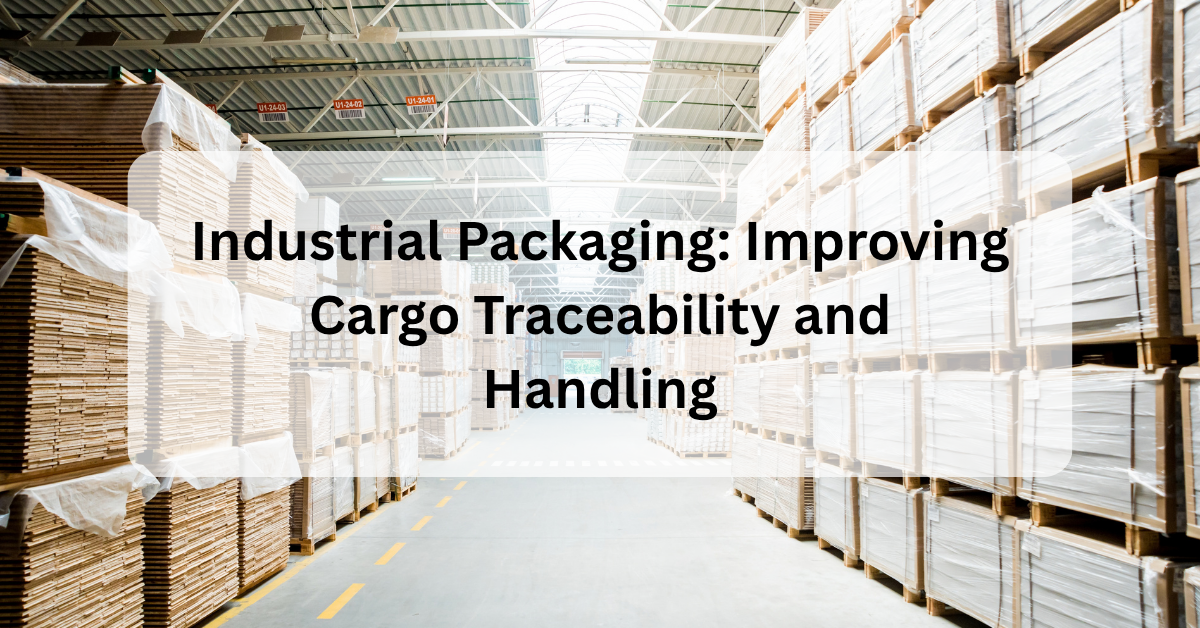

A package can protect industrial equipment perfectly and still create operational problems if nobody can quickly identify what is inside, where it belongs or how it should be handled.
For manufacturers, exporters and logistics teams, industrial packaging can play another important role beyond physical protection: helping teams identify and manage cargo throughout the logistics process.
Industrial shipments can pass through factories, warehouses, loading areas, transport vehicles and receiving facilities before reaching their destination. When multiple crates, pallets or packages are moving at the same time, clear identification becomes increasingly important.
Well-planned packaging can make essential cargo information easier to recognise, helping businesses reduce confusion, minimise handling errors and maintain better control over shipments.
Why Cargo Identification Matters
Industrial shipments are rarely as simple as moving one product from point A to point B.
A single project may involve multiple machines, components, spare parts or equipment packed separately. Some items may be delivered together, while others may be sent in different batches or transported through different routes.
Without clear identification, warehouse and logistics teams may need to open packages simply to determine their contents.
This can result in unnecessary handling and make it harder to confirm whether the correct package has been received.
A well-designed industrial packaging process can incorporate identification information such as:
- Package or shipment numbers
- Product descriptions
- Handling instructions
- Weight information
- Destination details
- Piece or package counts
- Project references
The exact information required depends on the shipment and the logistics process, but the objective is straightforward: make the cargo easier to identify without unnecessary unpacking.
Packaging Is Part of the Logistics Information Flow
Packaging physically travels with the cargo, making it a useful point for communicating information between different parties.
The International Maritime Organization‘s CTU Code covers the packing and securing of cargo transport units across the intermodal transport chain, including sea and land transportation. This reinforces the importance of considering what happens to cargo throughout its journey rather than viewing packing as an isolated factory activity.
For industrial businesses, this means packaging design should consider not only how the cargo is protected but also how warehouse staff, transport providers and receiving teams will interact with it.
Clear markings can help make this process more straightforward.
Using Standardised Labels for Better Traceability
For businesses handling larger or more complex supply chains, standardised identification can provide additional benefits.
GS1’s Logistic Label Guideline explains how logistic units can be uniquely identified and tracked throughout the supply chain using a Serial Shipping Container Code (SSCC). The system allows physical logistic units to be linked with electronic business information.
This concept is useful when industrial cargo passes through multiple logistics partners.
Instead of relying entirely on handwritten descriptions or internal references, businesses can establish a more consistent approach to identifying pallets, cases and other logistic units.
Not every industrial shipment needs to use a GS1 Logistic Label, but the underlying principle is valuable: cargo identification should be clear, consistent and connected to the information used to manage the shipment.
Make Important Information Visible Before Handling
Industrial packages may be large, heavy or difficult to access.
If important information is placed where warehouse or transport staff cannot easily see it, workers may need to move or reposition the package before confirming its details.
Packaging design should therefore consider label visibility and placement from the beginning.
For example, businesses may need to identify:
- Which side should face outward
- Where lifting information should appear
- Where handling symbols should be positioned
- Which information must remain visible during storage
- How labels can remain readable during transportation
ISO identifies graphical symbols for handling and storage as part of its packaging standards, highlighting the role of standardised information in the handling of packages.
These small details can make a difference when multiple teams handle the same cargo.
Identification Becomes More Important for Multi-Piece Shipments
Large machinery and industrial projects are often divided into multiple packages.
One machine may require several crates, pallets or protective packages because of its size, configuration or handling requirements.
In such situations, simply labelling each package with the machine name may not provide enough information.
A more structured identification system can indicate:
Machine A — Package 1 of 4
Machine A — Package 2 of 4
Machine A — Package 3 of 4
Machine A — Package 4 of 4
This makes it easier for receiving teams to confirm whether the complete shipment has arrived.
It can also help during warehouse storage, especially when packages are temporarily separated before the project continues.
Packaging Should Support Safe Handling
Identification and handling information should work together.
For heavy or oversized industrial cargo, packaging may need to communicate information about lifting points, orientation, weight or other handling considerations.
This information should be easy to locate before workers begin moving the package.
The CTU Code provides guidance on cargo packing and securing, including considerations for safe handling throughout the transport chain.
For businesses working with specialised equipment, discussing handling requirements during the packaging design stage can therefore help ensure that the package supports the operational process rather than becoming an obstacle to it.
Custom Industrial Packaging Supports Better Control
There is no universal labelling or packaging layout that works for every industrial shipment.
Cargo dimensions, packaging materials, transport requirements and the number of handling stages can all influence the final design.
Kaibeng’s packaging solutions are customised according to shipping requirements, destination and the unique properties of the product. The company also provides different packaging methods, including normal, vacuum, base, heat shrink, VCI and Triwall solutions.
With more than six decades of experience in the packaging and crating industry, Kaibeng also considers product requirements before recommending suitable solutions.
This experience is particularly useful for industrial cargo where packaging needs to work alongside warehousing, transportation and handling requirements.
Building Traceability Into the Packaging Process
Better traceability does not necessarily require complicated technology.
It can start with simple and consistent practices:
- Assign clear package identification.
- Keep package information consistent with shipping documents.
- Mark multi-piece shipments clearly.
- Position labels where they can be easily seen.
- Include relevant handling information.
- Maintain records that connect package identification with the shipment.
For businesses using digital warehouse or logistics systems, these physical identifiers can also support electronic tracking.
GS1 notes that logistics labels can connect physical logistic units with electronic business messages, supporting applications such as shipment routing, cross-docking and automated receiving.
Conclusion
Industrial packaging is not only about creating a physical barrier around valuable cargo. It can also become an important part of how businesses identify, manage and trace shipments throughout the logistics process.
Clear package identification, visible handling information and consistent labelling can help reduce unnecessary unpacking, simplify receiving and improve coordination between warehouses, transport providers and project teams.
For complex industrial shipments, packaging should therefore be planned with both physical protection and information visibility in mind. When these two functions work together, packaging becomes a more effective part of the overall logistics operation.