
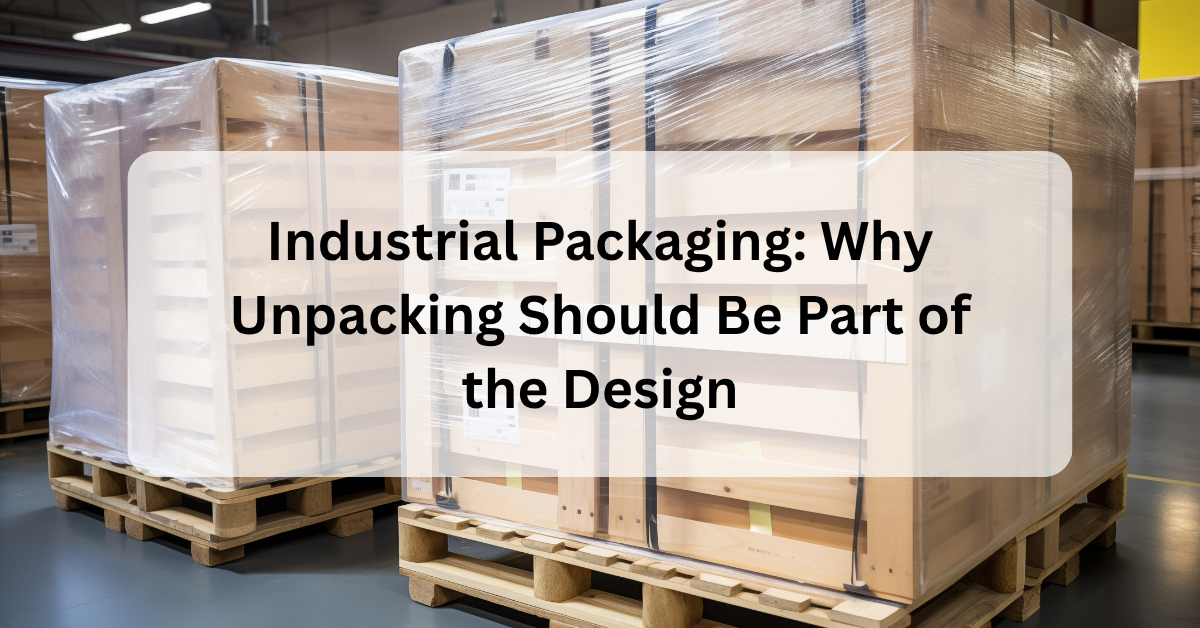

Industrial packaging is usually designed around one main objective: keeping cargo protected during transportation. But what happens after the shipment arrives?
For machinery, equipment and large industrial components, the packaging eventually has to be removed before the cargo can be inspected, moved into position or installed. If this stage is overlooked, a package that protects the cargo well during transport can create unnecessary work at the destination.
This is why effective industrial packaging should consider the complete journey — including unloading, unpacking and final installation.
Planning for the end of the journey can help businesses reduce unnecessary handling, improve site efficiency and make it easier for teams to access valuable equipment when it reaches its destination.
Packaging Should Consider the Final Destination
Industrial cargo does not always arrive at a warehouse where workers have unlimited space and equipment.
A machine could be delivered directly to a factory, production facility, construction site or installation area. The available space, lifting equipment and access routes can vary significantly between locations.
Before packaging begins, businesses should therefore consider:
- Where the cargo will be unloaded
- How the package will be opened
- What lifting equipment will be available
- Whether the cargo needs to be moved after unpacking
- Where packaging materials will be placed
- Whether the equipment needs to be installed immediately
These details can influence the packaging structure and how easily it can be removed.
The Best Package Is Not Always the Hardest to Open
Strong packaging is important, but maximum structural strength does not automatically mean maximum practicality.
Industrial equipment may need a rigid external structure during transportation while still requiring controlled access when it arrives.
For example, packaging may need to provide removable panels, accessible fasteners or suitable opening points so workers can reach the equipment without dismantling the entire structure.
This is particularly useful for large machinery where removing a complete crate may require additional lifting equipment or create unnecessary movement around the installation area.
A well-planned industrial packaging solution balances protection during transport with practical access at the destination.
Design Around the Unloading Process
Unloading is often the first major interaction between the packaged cargo and the destination team.
The packaging should support the intended handling method rather than make it more difficult.
Depending on the cargo, this may involve designing around:
- Forklift access
- Crane lifting
- Pallet jack access
- Skid structures
- Lifting points
- Weight distribution
- Available floor space
The International Maritime Organization‘s CTU Code provides guidance on the safe packing and securing of cargo transport units, including considerations relating to cargo handling and securing during transport.
While transport requirements remain a key consideration, businesses should also communicate the intended unloading method to their packaging provider before the package is constructed.
This allows the packaging design to work with the actual handling process.
Protect Components That Need to Stay With the Equipment
Industrial machinery may contain detachable components, accessories, cables, tools or smaller parts that need to remain with the main equipment.
These items can create a logistical problem if they are packed separately without a clear system.
A packaging plan can allocate dedicated spaces for related components, helping keep the shipment organised.
For example, smaller components can be secured in designated internal compartments rather than being placed loosely inside a large package.
This can make it easier for the receiving team to confirm that the required items are present before installation begins.
Packaging Can Support a Smoother Installation Process
For project-based equipment deliveries, time at the destination can be valuable.
If workers need to spend excessive time dismantling packaging, searching for components or repositioning materials, installation may be delayed.
A well-designed package can support a more orderly sequence:
Unload → Open → Inspect → Remove Protection → Position → Install
The exact sequence will depend on the equipment, but thinking about this workflow before packaging begins can identify potential problems early.
This approach is particularly relevant to machinery relocation and project logistics, where cargo may need to move directly from transportation into its intended operating location.
Kaibeng provides packaging alongside project logistics and machinery moving services, allowing packaging requirements to be considered within a broader logistics process rather than as a completely separate activity.
Choosing Protection Based on the Destination Environment
The destination environment can also affect how packaging should be designed.
Equipment may be exposed to humidity, dust or other external conditions while waiting to be installed. Sensitive machinery may therefore require additional protection even after transportation has finished.
Kaibeng’s packaging solutions include normal, vacuum, base, heat shrink, VCI and Triwall solutions, with the appropriate method selected according to shipping requirements, destination and the characteristics of the product.
For example, vacuum packaging or VCI protection may be considered when additional protection against moisture or corrosion is required.
The important point is that packaging requirements should be assessed according to the complete journey rather than only the time spent inside a truck or container.
Consider Packaging Removal and Disposal Too
Industrial packaging can involve substantial quantities of timber, protective materials and other components.
Once the equipment has been unpacked, someone needs to remove, store, reuse or dispose of those materials.
This can become a practical issue when the installation area has limited space.
Businesses can discuss the expected unpacking process with their packaging provider beforehand. In some projects, reusable components may be retained for return transportation or future storage, while other materials may need to be removed from the site.
Planning this stage in advance can help keep the installation area more organised.
Experience Matters in Industrial Packaging Design
Industrial cargo rarely follows a standard format.
Machinery can vary significantly in size, weight, shape, sensitivity and handling requirements. As a result, packaging decisions often need to be made around the specific cargo and its intended journey.
Kaibeng has more than six decades of experience in the packaging and crating industry and operates a 20,000 sq ft production space for crating solutions. Its packaging services are professionally engineered around individual product and shipping requirements.
This type of practical experience can be valuable when packaging needs to work alongside transportation, warehousing, machinery moving or installation activities.
Conclusion
Effective industrial packaging should not stop at the point where cargo arrives safely.
For machinery and industrial equipment, the next challenge is often getting the product out of its packaging and into its intended position efficiently.
By considering unloading access, opening methods, component organisation, destination conditions and packaging removal during the design stage, businesses can create a solution that supports both transportation and installation.
The result is packaging that does more than protect cargo. It becomes part of a better-planned logistics process — from the moment the equipment is packed until it is ready for use.