
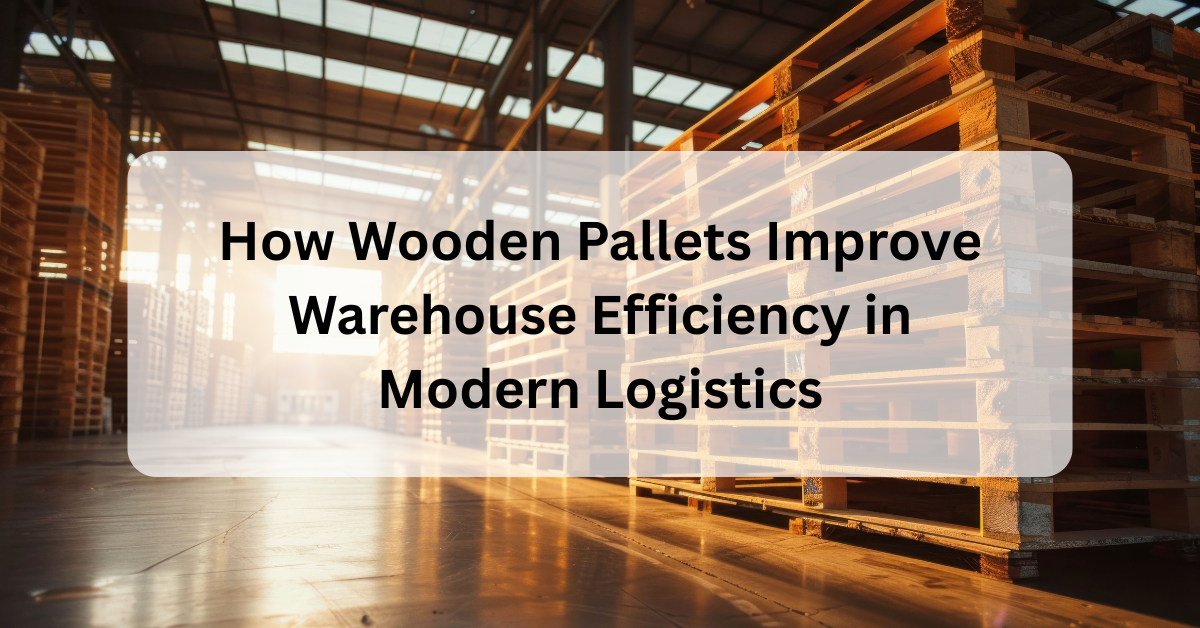

In fast-paced logistics environments, warehouse efficiency directly impacts operational costs, delivery timelines, and supply chain reliability. While automation and digital systems often receive the most attention, one of the most critical components of efficient warehouse operations remains surprisingly simple — wooden pallets.
Used across industries worldwide, wooden pallets provide the structural foundation for organised storage, safe cargo handling, and streamlined material flow. For logistics hubs like Singapore, where warehouse space and efficiency are crucial, the role of wooden pallets extends far beyond basic cargo support.
Understanding how wooden pallets contribute to warehouse performance can help businesses optimise their operations and reduce unnecessary logistics costs.
The Role of Wooden Pallets in Warehouse Operations
Warehouses handle constant movement of goods — receiving shipments, storing inventory, preparing orders, and dispatching cargo. Without a standardised system for organising products, these processes quickly become inefficient.
Wooden pallets provide a uniform base that allows goods to be stacked, moved, and stored in a structured way.
By elevating cargo off the ground, wooden pallets help businesses:
- Organise inventory efficiently
- Protect products from floor moisture
- Enable safe forklift handling
- Improve overall storage capacity
This simple yet effective design is why wooden pallets remain a core component of modern warehouse logistics.
Maximising Storage Space
Warehouse space is one of the most valuable resources in logistics operations, especially in land-constrained countries like Singapore. Efficient use of vertical storage is essential to maximise capacity.
Wooden pallets enable businesses to stack goods safely and utilise pallet racking systems. This allows warehouses to store products vertically instead of spreading them across the floor.
Benefits include:
- Increased storage density
- Better inventory organisation
- Reduced clutter and obstruction
- Improved workflow for warehouse staff
With properly designed pallet systems, warehouses can significantly increase their storage capacity without expanding physical space.
Faster Loading and Unloading
Handling loose cargo takes time and increases labour costs. Wooden pallets simplify this process by grouping goods into manageable units that can be moved quickly using forklifts or pallet jacks.
This improves efficiency in several key areas:
- Faster receiving of inbound shipments
- Quicker preparation of outbound deliveries
- Reduced manual handling effort
- Improved turnaround times at loading bays
For high-volume warehouses, these time savings accumulate quickly and contribute to smoother daily operations.
Improving Workplace Safety
Safety is a major concern in any warehouse environment. Poorly organised goods can lead to falling objects, unstable stacks, and workplace injuries.
Using wooden pallets helps maintain stable cargo stacks and reduces direct manual lifting by workers.
According to the International Labour Organization (ILO), proper material handling systems significantly reduce workplace injuries in logistics and warehouse operations.
By supporting structured storage and mechanical handling, wooden pallets play an important role in creating safer warehouse environments.
Supporting Inventory Management
Accurate inventory tracking is essential for modern logistics operations. Wooden pallets help businesses organise products into clear units that are easier to count, track, and manage.
When goods are palletised, warehouses can implement more efficient inventory systems such as:
- pallet-based stock management
- barcode tracking
- batch identification
- FIFO (First-In, First-Out) storage strategies
These systems improve inventory visibility and reduce errors in order fulfilment.
Durability for Repeated Warehouse Use
One of the biggest advantages of wooden pallets is their durability in high-traffic warehouse environments. Unlike some alternative materials, wooden pallets can withstand repeated handling and heavy loads.
When minor damage occurs, they can also be repaired by replacing individual boards, extending their usable life.
This makes wooden pallets a cost-effective choice for businesses that require long-term reliability in their warehouse operations.
Flexibility for Different Cargo Types
Warehouses often store a wide variety of products — from lightweight consumer goods to heavy industrial equipment. Wooden pallets can be manufactured in different sizes and designs to accommodate these varying needs.
Custom pallet solutions are commonly used for:
- heavy machinery components
- irregularly shaped equipment
- fragile industrial products
- export shipments requiring special handling
This flexibility allows warehouses to maintain consistent storage systems even when handling diverse cargo types.
Sustainability Benefits
As companies prioritise environmentally responsible logistics practices, wooden pallets also support sustainability initiatives.
Wood is a renewable resource when sourced responsibly, and wooden pallets can be reused, repaired, and recycled throughout their lifecycle.
This reduces waste and lowers the environmental impact of logistics operations.
Why Quality Wooden Pallets Matter
Not all pallets deliver the same performance. Poorly constructed pallets may break under load, causing cargo damage and operational disruption.
Businesses should work with experienced pallet manufacturers who ensure:
- high-grade timber materials
- proper structural design
- consistent quality control
- reliable load-bearing capacity
Quality pallets contribute directly to safer and more efficient warehouse operations.
Conclusion
In modern logistics, efficiency depends on the ability to move, store, and organise goods quickly and safely. Wooden pallets provide the foundation that makes these processes possible.
By enabling structured storage, faster handling, improved safety, and better inventory management, wooden pallets remain an essential component of efficient warehouse operations.
For businesses operating in competitive logistics environments like Singapore, investing in high-quality wooden pallets is a simple yet powerful way to improve operational performance and maintain reliable supply chain flow.