
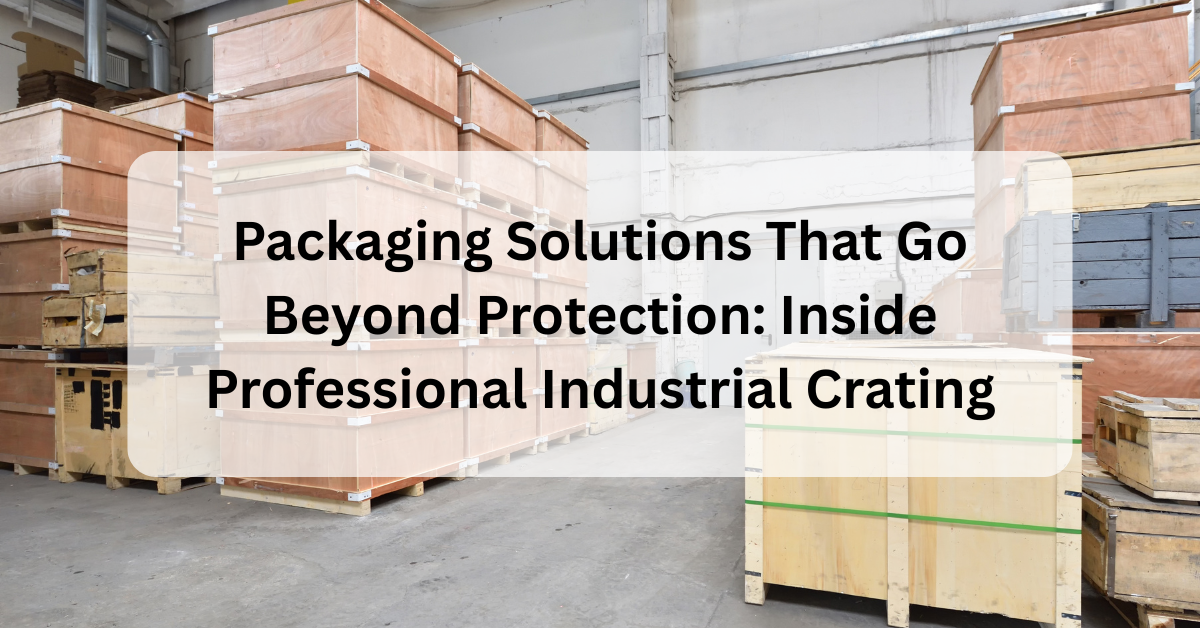

In industrial logistics, packaging is not a finishing step — it is a core risk-control process. From the moment equipment leaves the factory floor, it is exposed to handling stress, vibration, humidity, and environmental hazards. This is why professional packaging solution design and engineered crate construction play a critical role in ensuring cargo arrives safely, on time, and compliant with international requirements.
Behind every successful shipment is a packaging workflow that balances engineering precision, material science, and logistics expertise.
Why Packaging Solutions Matter More Than Ever
Modern supply chains are faster, more complex, and less forgiving of mistakes. A poorly designed crate or unsuitable packaging method can result in:
- Equipment damage during transit
- Delays at ports and inspection points
- Increased insurance claims
- Higher overall logistics costs
A professional packaging solution does not simply wrap a product — it anticipates risks across the entire journey.
From Assessment to Execution: How Professional Packaging Works
Effective packaging solutions begin with understanding the product and its journey.
1. Cargo Assessment & Planning
Every packaging solution starts with a detailed evaluation of:
- Cargo dimensions and weight
- Fragility and sensitivity
- Mode of transport (sea, air, land)
- Transit duration and destination
This information determines whether the shipment requires a reinforced crate, moisture control, shock absorption, or specialised handling features.
2. Engineered Crate Design
A crate is not a generic box. In professional packaging, each crate is engineered to:
- Support load-bearing points
- Prevent internal movement
- Withstand lifting, stacking, and vibration
High-grade timber, reinforced joints, and structural bracing ensure the crate performs as a protective frame throughout transport.
This level of engineering is especially important for industrial machinery, precision tools, and high-value equipment.
Packaging Methods Designed for Real-World Conditions
Different cargo types require different protection strategies. A comprehensive packaging solution integrates multiple methods based on risk exposure.
Normal Packaging
Used for robust equipment with minimal sensitivity, focusing on structural support and safe handling.
Vacuum Packaging
Removes air to reduce moisture and oxidation risks, often used for sensitive mechanical or electronic components.
Heat Shrink Packaging
Creates a tight protective seal around cargo, reducing exposure to dust, water, and surface damage.
VCI (Volatile Corrosion Inhibitor)
Protects metal components from corrosion during long storage or sea freight.
Triwall Solutions
Heavy-duty corrugated systems used in combination with crates for added protection and weight efficiency.
Each method enhances the crate’s performance depending on transit conditions and cargo vulnerability.
Crating for Singapore’s Export Environment
Singapore’s tropical climate introduces unique challenges for packaging solutions:
- High humidity levels
- Frequent rainfall
- Long sea freight exposure
- Strict export inspections
Crates used for export must protect cargo not only from impact, but also from moisture, corrosion, and biological risks.
According to the International Plant Protection Convention (IPPC), untreated wood packaging can carry pests that threaten ecosystems and agriculture, which is why proper treatment and controlled packaging processes are mandatory for global trade.
This highlights why professional packaging solutions must align with both engineering and regulatory standards.
Experience and Process Control Make the Difference
The strength of a packaging solution lies in consistency and control. Experienced providers manage:
- Material selection
- Crate construction quality
- Packaging method integration
- Final inspection before dispatch
This reduces the likelihood of failures that often occur when packaging is treated as an afterthought.
Professional teams combine traditional craftsmanship with modern machinery to ensure every crate meets the required performance standard.
Packaging Solutions That Improve Efficiency, Not Just Safety
Well-designed packaging solutions also streamline logistics operations:
- Faster loading and unloading
- Safer forklift and crane handling
- Optimised container space
- Reduced downtime and rework
This operational efficiency directly contributes to cost savings and project reliability.
Why a Professional Packaging Solution Is a Strategic Investment
Cutting corners on packaging may reduce short-term costs, but it increases long-term risk. A single damaged shipment can erase months of savings through repairs, delays, and lost trust.
A professionally engineered packaging solution ensures:
- Cargo protection
- Compliance readiness
- Predictable performance
- Peace of mind
Conclusion
In industrial logistics, packaging is not about appearance — it is about performance. A well-designed packaging solution, anchored by a professionally engineered crate, protects equipment through every stage of handling, storage, and transport.
By combining engineering expertise, proven packaging methods, and controlled processes, businesses can move valuable cargo with confidence — knowing that protection starts long before the shipment begins its journey.