
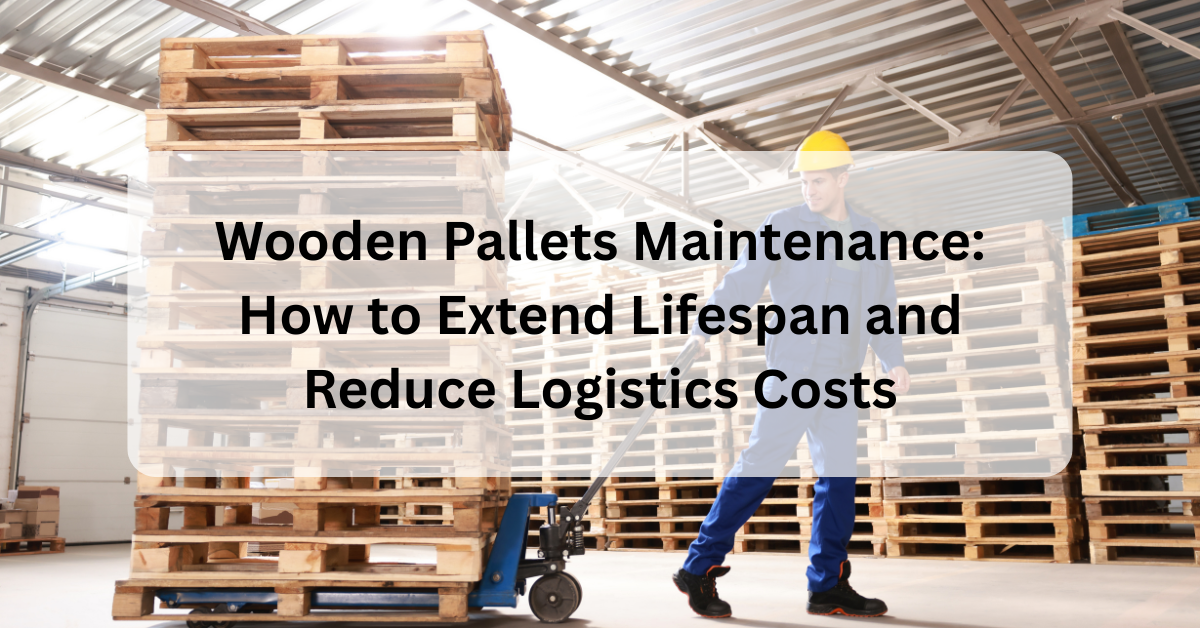

In logistics and warehousing, businesses often focus on selecting the right packaging — but rarely on maintaining it. In reality, proper maintenance of wooden pallets can significantly reduce operational costs, improve safety, and enhance overall supply chain efficiency.
For companies in manufacturing, export, and industrial logistics, wooden pallets are used repeatedly across storage, handling, and transportation. Without proper care, pallets degrade quickly, leading to unnecessary replacements and higher long-term expenses.
This guide explores how businesses can maximise the lifespan of wooden pallets through effective maintenance strategies.
Why Wooden Pallet Maintenance Matters
Wooden pallets are designed for durability, but they are constantly exposed to stress:
- Heavy loads during transport
- Repeated forklift handling
- Environmental factors such as humidity and temperature
- Impact from stacking and movement
Without proper maintenance, these factors can lead to:
- Cracked boards
- Loose fasteners
- Structural weakness
- Increased risk of load failure
Maintaining wooden pallets ensures consistent performance and reduces the likelihood of operational disruptions.
Common Causes of Wooden Pallet Damage
Understanding how pallets get damaged is the first step to extending their lifespan.
1. Improper Handling
Forklift misuse is one of the leading causes of pallet damage. Incorrect lifting angles or sudden impacts can break deck boards or weaken structural joints.
2. Overloading
Using wooden pallets beyond their load capacity leads to bending, cracking, and long-term structural fatigue.
3. Environmental Exposure
In humid climates like Singapore, moisture can affect wood integrity over time. Excessive exposure to rain or damp conditions can weaken pallets and promote mould growth.
4. Poor Storage Practices
Stacking pallets unevenly or storing them on unstable surfaces can cause warping and deformation.
Best Practices for Wooden Pallet Maintenance
1. Regular Inspection
Routine inspection is essential for identifying damage early. Check for:
- Broken or missing boards
- Loose nails or fasteners
- Signs of rot or moisture damage
- Structural instability
Damaged pallets should be repaired or removed from circulation immediately to prevent safety risks.
2. Timely Repairs
One of the key advantages of wooden pallets is their repairability. Instead of discarding damaged pallets, businesses can:
- Replace broken deck boards
- Reinforce weak joints
- Tighten loose fasteners
This extends the pallet’s usable life and reduces replacement costs.
3. Proper Storage Conditions
To maintain structural integrity, wooden pallets should be stored:
- In dry, covered areas
- Away from direct ground contact
- In stable, evenly stacked configurations
Good storage practices help prevent moisture absorption and physical deformation.
4. Train Handling Personnel
Forklift operators and warehouse staff play a critical role in pallet maintenance. Proper training ensures:
- Correct lifting techniques
- Reduced impact during handling
- Better load distribution
Minimising handling errors significantly extends the lifespan of wooden pallets.
The Role of Wooden Pallets in Sustainable Logistics
Maintaining wooden pallets is not just about cost savings — it also supports sustainability goals.
Reusable pallets reduce the need for new raw materials and minimise waste. By extending pallet lifespan through maintenance and repair, businesses contribute to more sustainable logistics practices.
According to the Food and Agriculture Organization of the United Nations (FAO), sustainable use of wood resources plays a key role in reducing environmental impact and promoting responsible supply chains.
This reinforces the importance of maintaining and reusing wooden pallets rather than treating them as disposable items.
Cost Savings Through Preventive Maintenance
Replacing pallets frequently can be a hidden cost in logistics operations. Preventive maintenance helps businesses:
- Reduce pallet procurement expenses
- Lower waste disposal costs
- Minimise cargo damage risks
- Improve operational efficiency
Over time, these savings can significantly impact overall logistics budgets.
Safety Benefits of Well-Maintained Pallets
Damaged pallets are a major safety hazard in warehouses and during transport. They can lead to:
- Collapsing loads
- Workplace injuries
- Equipment damage
By maintaining wooden pallets in good condition, businesses create a safer working environment and reduce liability risks.
When to Replace Wooden Pallets
While maintenance extends lifespan, pallets should be replaced when:
- Structural integrity is compromised
- Repairs are no longer cost-effective
- Pallets no longer meet load requirements
- There is visible rot or severe damage
A balanced approach between repair and replacement ensures both safety and efficiency.
Why Quality Matters from the Start
Maintenance is more effective when pallets are built to high standards from the beginning. High-quality wooden pallets made from strong timber and proper fastening methods are more durable and easier to repair.
Partnering with experienced pallet providers ensures better long-term performance and reduced maintenance challenges.
Conclusion
Wooden pallets are a critical component of logistics operations, but their true value lies in how well they are maintained. With proper inspection, repair, storage, and handling practices, businesses can significantly extend the lifespan of their wooden pallets, reduce operational costs, and improve safety.
In a competitive and sustainability-driven logistics environment, maintaining wooden pallets is not just a maintenance task — it is a strategic advantage that supports efficiency, reliability, and long-term cost control.