
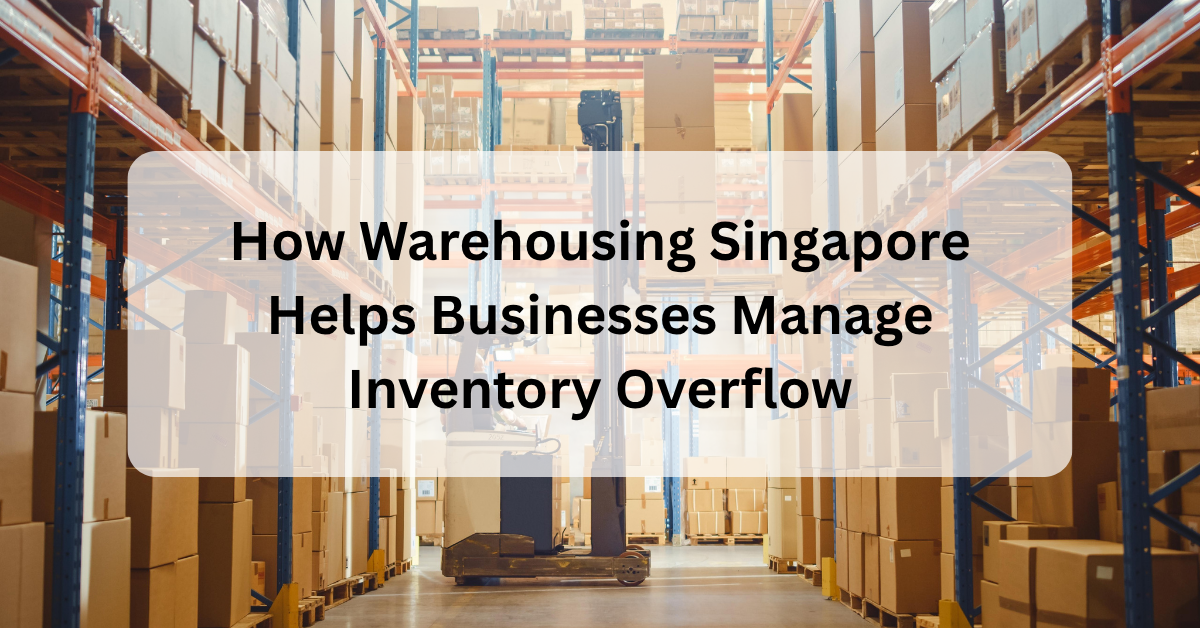

Growth is good for business, but increasing inventory can quickly create a practical problem: where should everything be stored?
Manufacturers may have finished products waiting for delivery, importers may receive shipments earlier than expected, and project-based businesses may need to hold machinery or components before they are required. Expanding an existing facility to accommodate temporary inventory can be expensive and inefficient, particularly when additional space is only needed for a limited period.
This is where professional warehousing Singapore solutions can provide greater flexibility.
Instead of committing capital to additional premises, businesses can use external warehouse space to accommodate excess inventory while maintaining access to their goods when needed. For companies handling industrial equipment, machinery, and project cargo, the right warehousing arrangement can also provide professional handling and storage support.
What Causes Inventory Overflow?
Inventory overflow does not necessarily mean a business has poor stock management. It can happen for many operational reasons.
Common situations include:
- Seasonal increases in demand
- Bulk purchasing from suppliers
- Early arrival of imported goods
- Production exceeding immediate demand
- Temporary project requirements
- Delayed construction or installation schedules
- Business expansion into new markets
- Relocation or renovation of existing premises
For example, a manufacturer may receive a large shipment of components several weeks before they are required for production. Keeping everything inside the company’s existing facility may restrict production space or create unnecessary congestion.
External warehousing provides an alternative without requiring a permanent expansion.
Why Renting More Space Is Not Always the Best Answer
When storage space becomes limited, businesses may immediately consider expanding their premises.
However, a larger facility can involve significant commitments, including:
- Higher rental costs
- Renovation expenses
- Additional utilities
- Warehouse equipment
- Staffing requirements
- Maintenance
- Longer-term contractual commitments
If the additional inventory is temporary, these costs may not make commercial sense.
Professional warehousing Singapore services allow businesses to access storage capacity based on operational requirements instead of investing heavily in permanent infrastructure.
This can be particularly useful when inventory levels fluctuate throughout the year.
Temporary Storage for Industrial Equipment
Not all warehouse cargo consists of boxes or consumer products.
Industrial businesses may need temporary storage for:
- Machinery
- Engineering components
- Electrical equipment
- Manufacturing equipment
- Spare parts
- Project materials
- Export cargo
These items may require more space and specialised handling than ordinary inventory.
Heavy or oversized cargo may need forklifts or other lifting equipment for loading, unloading, and positioning. Singapore’s Workplace Safety and Health framework includes lifting equipment and forklifts among regulated machinery and equipment, highlighting the importance of appropriate safety practices when handling industrial cargo.
For this reason, businesses should consider not only warehouse capacity but also whether the facility is suitable for the type of goods being stored.
Keeping Business Premises More Organised
Excess inventory can affect more than available storage space.
When production areas, offices, loading zones, or workshops become crowded with materials, daily operations can become more difficult.
Items may block access routes, reduce working space, or interfere with production activities.
Moving surplus or non-urgent inventory to an external warehouse can help businesses maintain a more organised working environment.
This is especially useful for manufacturers that need to prioritise production space rather than using valuable floor area for long-term storage.
Warehousing as a Buffer Between Supply and Demand
A warehouse can act as a buffer between when goods arrive and when they are actually needed.
Consider a business importing equipment from overseas. The shipment may arrive in Singapore before the project site is ready to receive it.
Rather than arranging premature delivery, the equipment can be stored temporarily and released when the project schedule reaches the appropriate stage.
This gives businesses greater control over delivery timing while reducing unnecessary movements.
Singapore’s position as a major logistics hub makes this type of flexibility particularly valuable. The Singapore Economic Development Board notes that the country has strong regional connectivity and serves as a base for major logistics and supply chain operations.
Supporting Import and Export Operations
Warehousing can also play an important role in international trade.
Imported goods may need to remain in storage before they are distributed locally, while export cargo may need to be held until the appropriate transportation arrangements are confirmed.
Singapore Customs provides several warehousing schemes for specific categories of goods. For example, licensed warehouses can allow approved businesses to store certain dutiable goods with duty and GST suspended until the goods are removed for local use.
Businesses should determine which customs requirements apply to their specific goods and warehouse arrangement rather than assuming every storage facility operates under the same scheme.
Combining Warehousing With Packaging and Crating
For industrial businesses, warehousing can become even more useful when combined with other logistics services.
For example, machinery may arrive at a warehouse before being prepared for export. During the storage period, the equipment can be organised and prepared for customised packaging or wooden crating before transportation.
A typical workflow may look like:
Cargo arrival → Storage → Preparation → Crating → Transportation
This reduces the need to move equipment repeatedly between unrelated locations.
It can also make project coordination easier because storage, packaging, and subsequent dispatch can be planned around the same timeline.
What to Consider When Choosing a Warehousing Provider
Not every warehouse is suitable for every type of inventory.
Before selecting a warehousing Singapore provider, businesses should consider:
Storage Capacity
Make sure the facility can accommodate the volume, dimensions, and weight of the inventory.
Cargo Handling
Check whether suitable equipment and trained personnel are available for heavy or oversized goods.
Accessibility
Consider how easily cargo can be received, retrieved, and dispatched when required.
Storage Requirements
Sensitive equipment may require appropriate protection from environmental exposure and unnecessary handling.
Additional Services
A warehouse that can coordinate packaging, crating, cargo handling, or transportation may provide greater operational convenience.
Kaibeng’s Warehousing Support
Kaibeng provides warehousing services in Singapore for businesses that need additional storage and cargo handling support.
Its warehousing capabilities complement its broader services, including packaging, wooden crating, machinery moving, and project logistics. This allows businesses handling industrial cargo to coordinate different stages of their supply chain with a single experienced service provider.
For companies dealing with temporary inventory overflow, machinery waiting for a project, or cargo that requires preparation before dispatch, professional warehousing can provide valuable flexibility.
Businesses can explore Kaibeng’s warehousing services to learn more about its capabilities.
Conclusion
Inventory growth does not always require businesses to invest in larger premises. Temporary demand, early shipments, project schedules, and seasonal fluctuations can all create situations where additional storage is needed.
Professional warehousing Singapore solutions provide businesses with a flexible way to manage excess inventory while keeping their own facilities organised and operational.
For industrial businesses, the ideal warehouse should offer more than floor space. Suitable handling capabilities, accessibility, storage practices, and complementary logistics services can make the difference between simply storing cargo and managing it efficiently.
By using external warehousing strategically, businesses can accommodate changing inventory requirements without making permanent investments that may not be necessary in the long term.